


Magazine
Even the best audio system can only sound as good as the room in which it is installed. This fact is often underestimated, although room acoustics have an enormous influence on sound quality and the listening experience. Many people invest time and money in high-quality speakers or amplifiers, but neglect the acoustic properties of their living space. Even simple changes can noticeably improve sound reproduction.
The most common room acoustics problems at a glance
Modern living spaces with large glass surfaces, tiled floors and minimalist furnishings create ideal conditions for disruptive reverberation. When sound waves bounce off the hard surfaces unhindered, echo effects are created that significantly impair the sound image. Individual instruments blur into one another, while the vocals lose clarity - the music becomes an undefined mush of sound.
Equally problematic are booming basses caused by unfavorable room proportions. Intrusive, dominant bass can drown out even the finest musical details and impair the overall listening experience. What should actually provide powerful sound becomes a disruptive element that destroys the balance of the music.
Fortunately, you don't have to put up with these problems. Even simple measures can significantly improve the sound.
Basics of room acoustics
The interplay between absorption and reflection determines the acoustic character of your room. Absorption means that sound waves are “swallowed” by materials. Soft, porous materials such as textiles or carpets are particularly effective at absorbing higher frequencies.
Reflection, on the other hand, describes the bouncing back of sound waves off hard surfaces. While a certain amount of reflection is important for creating a natural sense of space, too much can degrade the sound quality. The goal is to achieve a balanced ratio.
Materials and room geometry have a major influence. Wood and textiles are natural absorbers, while glass, metal, and concrete are highly reflective. Parallel walls can create standing waves, whereas irregular geometries result in more natural sound distribution.
Different frequency ranges behave completely differently. High frequencies are absorbed even by thin curtains, while deep bass requires thick materials or special bass absorbers.
Measures to improve the room acoustics
You don't have to turn your living room into a recording studio to achieve significant improvements. Even the right furniture can make a big difference to your audio quality.
Suitable furniture for a better sound
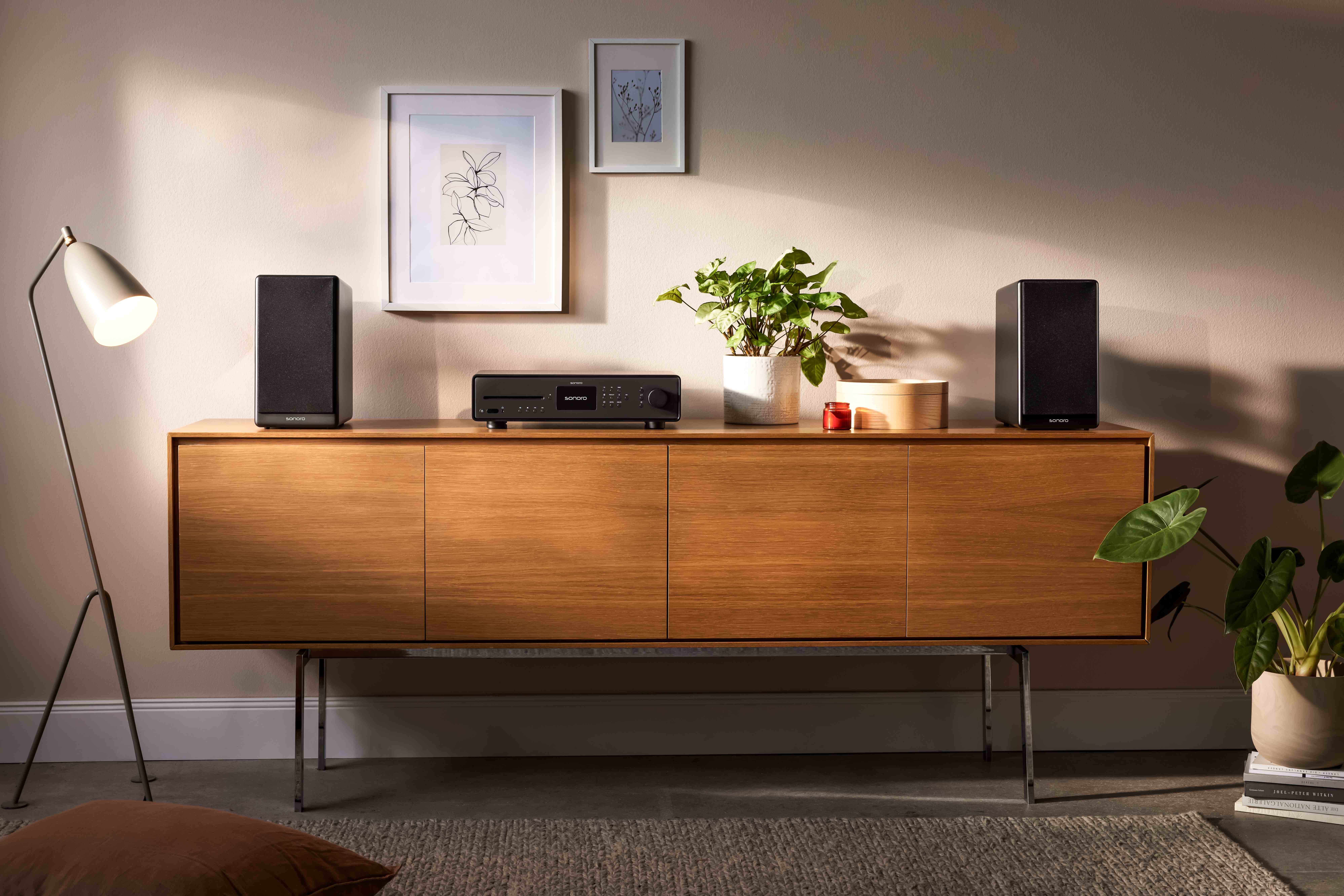
Upholstered furniture such as sofas and armchairs naturally absorb sound waves and significantly reduce disturbing reverberation. A filled bookshelf fulfills several functions at once: It not only acts as an absorber, but also diffuses the sound through the irregular surface of the books. Even houseplants are valuable acoustic aids, as larger plants with dense foliage can reduce high-frequency reflections and at the same time create a pleasant atmosphere in your listening room.
Minimizing acoustic problems with textiles
It's even easier with textiles, which offer immediately effective solutions to acoustic problems. Thick carpets and runners on hard floors significantly reduce floor reflections and ensure clear sound reproduction. Equally effective are heavy curtains or drapes on windows that eliminate distracting glass reflections. These quick fixes require minimal effort but have immediate audible improvements.
Special solutions for home studios
If you want to take an even more targeted approach, you can use special sound absorbers. Acoustic panels can be discreetly attached to walls and reduce problematic frequency ranges, while ceiling sails combat reflections from above. Wall absorbers can be placed strategically to eliminate early reflections. These professional solutions are ideal for home studios or rooms with special acoustic challenges.
Room correction apps for your audio device
Room correction apps offer a particularly modern solution that uses technology to address complex acoustic problems. These systems measure the acoustic properties of your room and digitally correct problematic frequency ranges. An intuitive room correction app is available at sonoro MAESTRO andtheMEISTERSTÜCK (Gen. 2)comewith an intuitive room correction app that automatically adapts your system to the unique characteristics of the room. The app guides you step by step through the measurement process and then optimizes sound reproduction for your specific listening position.
Positioning the speakers in the stereo triangle
Positioning within the stereo triangle also plays a crucial role in achieving optimal acoustics. The so-called stereo triangle describes the ideal arrangement of two speakers and the listening position in an equilateral triangle, with the optimal listening position located at the apex. This geometric setup ensures that the sound waves from both speakers reach your ears simultaneously, creating a natural, three-dimensional soundstage. Other important factors include the correct distance between the speakers, their height positioning, and the distance from the wall. You can find detailed information on these topics in our separate articles on speaker positioning and the stereo triangle.
What you can do for better room acoustics
In summary, there are various approaches to optimizing the acoustics of your listening room:
- Immediate measures: Strategically placed upholstered furniture, filled bookshelves and indoor plants act as natural sound absorbers
- Textile solutions: Thick carpets on hard floors and heavy curtains on windows reduce disturbing reflections
- Professional elements: Use acoustic panels, ceiling sails or wall absorbers for targeted frequency correction
- Technological support: use room correction apps to make automatic adjustments
- Optimal positioning: arrange speakers and listening position in the ideal stereo triangle
The key is to start with simple measures and gradually expand them if necessary. Even small changes can bring about big improvements.
Your path to optimum room acoustics
Optimizing room acoustics is a step-by-step process that doesn't have to happen overnight. Start with simple measures such as the strategic placement of carpets, curtains and furniture. These inexpensive improvements can make a significant difference to sound quality. Don't be afraid to experiment - small changes are often enough to make a big difference to the sound. For ambitious listeners, professional acoustic elements and room correction systems offer further optimization possibilities. With patience and the right measures, you can transform any room into an optimal listening environment that gives your music the space it needs to develop to its full potential.
